A Major Scale on Piano for Beginners (Piano Only)
As you continue your piano journey, the A Major scale introduces you to multiple sharps while still being smooth and comfortable to play. It is widely used in many popular songs and helps you develop better finger control.
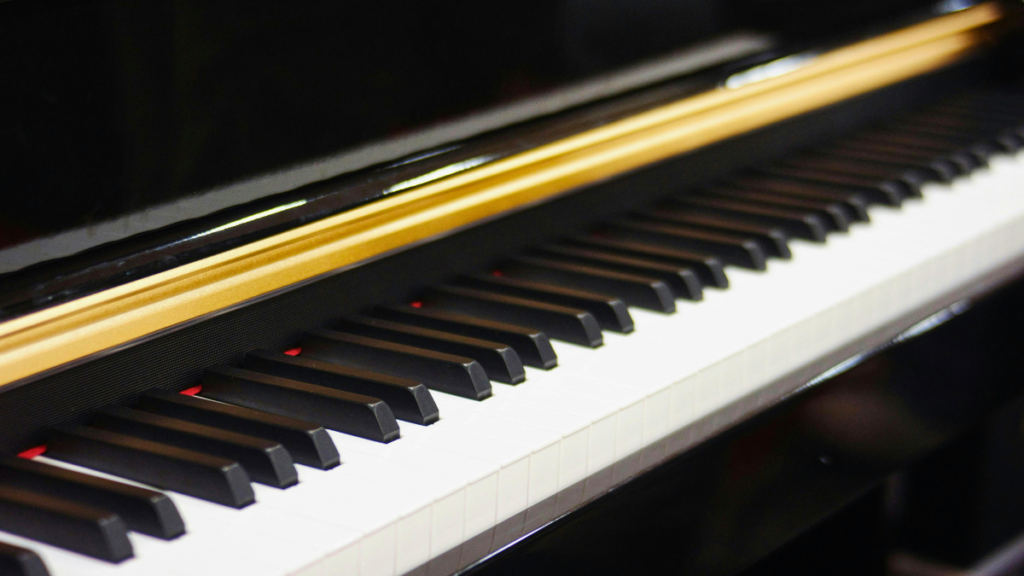
A Major Scale on Piano – A Complete Guide
The A Major scale is a beginner-to-intermediate level scale that includes both white and black keys. It helps improve coordination and builds a strong foundation for playing in different keys.
What Is the A Major Scale?
The A Major Scale is a seven-note musical scale:
A – B – C# – D – E – F# – G# – A
It is called a major scale because it produces a bright, happy, and uplifting sound.
Why Learn the A Major Scale on Piano?
Improves understanding of sharp notes
Builds finger coordination
Strengthens hand movement
Helps in playing songs in A key
Expands your knowledge of major scales
A Major Scale Notes Explained
A → B → C# → D → E → F# → G# → A
Pattern:
Whole – Whole – Half – Whole – Whole – Whole – Half
This is the standard major scale pattern.
A Major Scale on Piano Keys
This scale includes both white and black keys:
A (white key)
B (white key)
C# (black key)
D (white key)
E (white key)
F# (black key)
G# (black key)
Fingering Guide
Right Hand
1 – 2 – 3 – 1 – 2 – 3 – 4 – 5
Left Hand
5 – 4 – 3 – 2 – 1 – 3 – 2 – 1
How to Practice the A Major Scale (Piano Tips)
Start slowly and focus on accuracy
Keep your hands relaxed
Practice with a metronome (50–60 BPM)
Practice hands separately first
Gradually increase speed
Common Mistakes Beginners Make
Forgetting sharp notes (C#, F#, G#)
Poor fingering technique
Playing too fast
Lack of coordination
Inconsistent rhythm
How the A Major Scale Helps You as a Pianist
Improves finger strength
Builds confidence on the keyboard
Enhances musical understanding
Prepares for advanced scales
Helps in playing real songs
Piano Exercises (Beginner to Intermediate Level)
Exercise 1: Ascending & Descending
Play from low A to high A, then return slowly
Exercise 2: One Note per Beat
Use a metronome at 60 BPM
Exercise 3: Hands Separate → Together
Right → Left → Both
You can also check here- A major scale on the piano
FAQ
Q1- What is the A Major Scale?
Ans- A, B, C#, D, E, F#, G#, A
Q2- Is A Major easy?
Ans- Yes, it is beginner-friendly with some sharps
Q3- How many sharps are in A Major?
Ans- Three sharps (C#, F#, G#)
Q4- How long should I practice daily?
Ans- 10–15 minutes is enough
Q5- Is this scale important?
Ans- Yes, it is essential for beginners
If you want to learn the A minor scale on piano, check here 👇
If this guide helped you, comment “A Major Mastery” 🎹🔥
Which part felt harder—fingering or coordination?
Final Thoughts
The A Major Scale is a great step forward in your piano learning journey. It introduces multiple sharps while keeping the flow smooth and playable. With regular practice, you’ll notice better control, speed, and confidence on the keyboard.

Hi, I’m Nikhil Farenjiya, a music producer and professional singer with 10 years of experience. I share my knowledge and passion for music through writing to help aspiring artists grow. My blog is dedicated to inspiring and guiding music lovers on their creative journey.