Piano Chords for Beginners – Complete Guide (All Chords Explained with Full List)
If you’re starting your musical journey, learning piano chords for beginners is the most important step. This complete guide covers all types of piano chords, including natural, sharp (#), and flat (b) chords, so that you don’t miss anything.
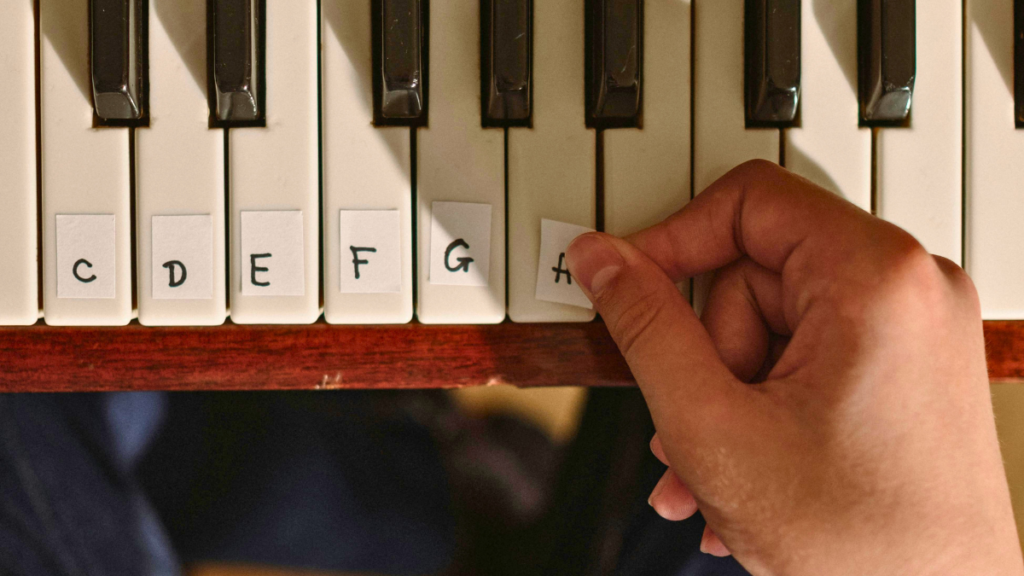
What Are Piano Chords?
A piano chord is a group of three or more notes played together. The most basic chords are called triads, but chords can extend beyond three notes.
Example:
C – E – G → C Major
Total Piano Chords – How Many Are There?
Technically, hundreds of chords exist.
In practice, chords are built from:
- 12 root notes
- Multiple chord types (Major, Minor, 7th, etc.)
So, total usable chords =
12 notes × chord types = 100+ chords
12 Root Notes (Including Sharps & Flats)
C
C# / Db
D
D# / Eb
E
F
F# / Gb
G
G# / Ab
A
A# / Bb
B
All piano chords are built from these notes.
1. Major Chords (All 12)
Formula: 1 – 3 – 5
C → C E G
C# → C# F G#
D → D F# A
D# → D# G A#
E → E G# B
F → F A C
F# → F# A# C#
G → G B D
G# → G# C D#
A → A C# E
A# → A# D F
B → B D# F#
2. Minor Chords (All 12)
Formula: 1 – b3 – 5
C → C Eb G
C# → C# E G#
D → D F A
D# → D# F# A#
E → E G B
F → F Ab C
F# → F# A C#
G → G Bb D
G# → G# B D#
A → A C E
A# → A# C# F
B → B D F#
3. Diminished Chords (All 12)
Formula: 1 – b3 – b5
Cdim → C Eb Gb
C#dim → C# E G
Ddim → D F Ab
D#dim → D# F# A
Edim → E G Bb
Fdim → F Ab B
F#dim → F# A C
Gdim → G Bb Db
G#dim → G# B D
Adim → A C Eb
A#dim → A# C# E
Bdim → B D F
4. Augmented Chords (All 12)
Formula: 1 – 3 – #5
Caug → C E G#
C#aug → C# F A
Daug → D F# A#
D#aug → D# G B
Eaug → E G# C
Faug → F A C#
F#aug → F# A# D
Gaug → G B D#
G#aug → G# C E
Aaug → A C# F
A#aug → A# D F#
Baug → B D# G
5. Seventh Chords
Major 7th
Cmaj7 → C E G B
Dmaj7 → D F# A C#
Dominant 7th
C7 → C E G Bb
G7 → G B D F
Minor 7th
Cm7 → C Eb G Bb
Am7 → A C E G
6. Suspended Chords
Csus2 → C D G
Csus4 → C F G
These can be applied to all 12 root notes.
7. Extended Chords (Advanced)
C9 → C E G Bb D
C11 → C E G Bb D F
C13 → C E G Bb D F A
The same pattern applies to all root notes.
Piano Chord Formula Master Table
| Chord Type | Formula |
|---|---|
| Major | 1 – 3 – 5 |
| Minor | 1 – b3 – 5 |
| Diminished | 1 – b3 – b5 |
| Augmented | 1 – 3 – #5 |
| Major 7th | 1 – 3 – 5 – 7 |
| Dominant 7th | 1 – 3 – 5 – b7 |
| Minor 7th | 1 – b3 – 5 – b7 |
Beginner Shortcut (Very Important)
You don’t need to memorize every chord.
Just learn:
- 12 root notes
- Chord formulas
With this, you can build any chord on your own.
Best Piano Chords for Beginners
C Major
G Major
A Minor
F Major
These four chords are used in thousands of songs.
You can also check here- Piano chords for beginners
Frequently Asked Questions (Piano Chords for Beginners)
Q1: What are piano chords for beginners?
Piano chords for beginners are basic combinations of 3 notes (triads) that help you play songs easily and understand music structure.
Q2: How many piano chords are there?
There are hundreds of piano chords, but they are built using 12 root notes and different chord types like major, minor, and seventh chords.
Q3: What are the easiest piano chords to learn first?
The easiest piano chords for beginners are:
C Major, G Major, A Minor, and F Major.
Q4: What is the difference between major and minor chords?
Major chords sound bright and happy, while minor chords sound sad and emotional. The difference comes from the third note.
Q5: Do piano chords include black keys?
Yes, many piano chords include black keys (sharps and flats), especially advanced chords.
Q6: How long does it take to learn piano chords?
With daily practice of 10–15 minutes, beginners can learn basic chords within 2 to 4 weeks.
Q7: Can I play songs using only chords?
Yes, many songs can be played using just chords, especially pop and beginner-level songs.
Q8: What are chord formulas in piano?
Chord formulas are patterns like:
Major = 1–3–5
Minor = 1–b3–5
They help you build any chord easily.
Q9: Should I memorize all piano chords?
No, instead of memorizing, learn chord formulas and root notes so you can build any chord yourself.
Q10: What are the most important chords for beginners?
The most important chords are:
C, G, Am, F
These are used in thousands of songs.
Q11: Are sharp (#) and flat (b) chords different?
They can sound the same, but are written differently. For example:
C# = Db (same sound, different name)
Q12: What is a triad in piano?
A triad is a chord made of three notes: root, third, and fifth.
Q13: Can beginners learn advanced chords like 7th or 9th?
Yes, but it’s best to start with major and minor chords first, then move to advanced chords.
Q14: How should I practice piano chords daily?
Start slow, practice chord transitions, use a metronome, and repeat daily for better results.
Q15: Why are piano chords important?
Piano chords are essential for playing songs, creating music, and understanding harmony.
If you want to learn how to play piano, check here 👇
If this guide helped you, comment “Piano chords Mastery” 🎹🔥
Final Thoughts
This piano chords for beginners guide gives you everything—from basic chords to advanced structures. You don’t need to memorize hundreds of chords; just understand the system, and you can build any chord instantly.

Hi, I’m Nikhil Farenjiya, a music producer and professional singer with 10 years of experience. I share my knowledge and passion for music through writing to help aspiring artists grow. My blog is dedicated to inspiring and guiding music lovers on their creative journey.